Be Salt Wise in Winter
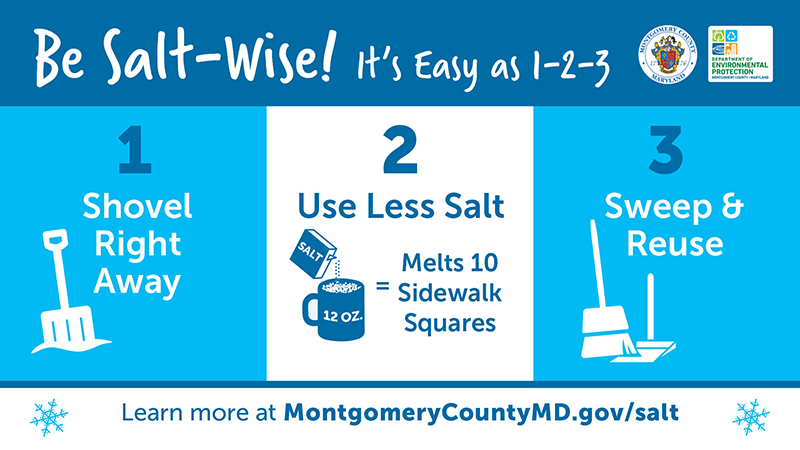
It’s as easy as 1-2-3! Shovel right away. Use less salt. (One 12-ounce mug is all you need to melt 10 sidewalk squares!) After storm events, sweep up any excess salt for re-use.
It’s as easy as 1-2-3! Shovel right away. Use less salt. (One 12-ounce mug is all you need to melt 10 sidewalk squares!) After storm events, sweep up any excess salt for re-use.
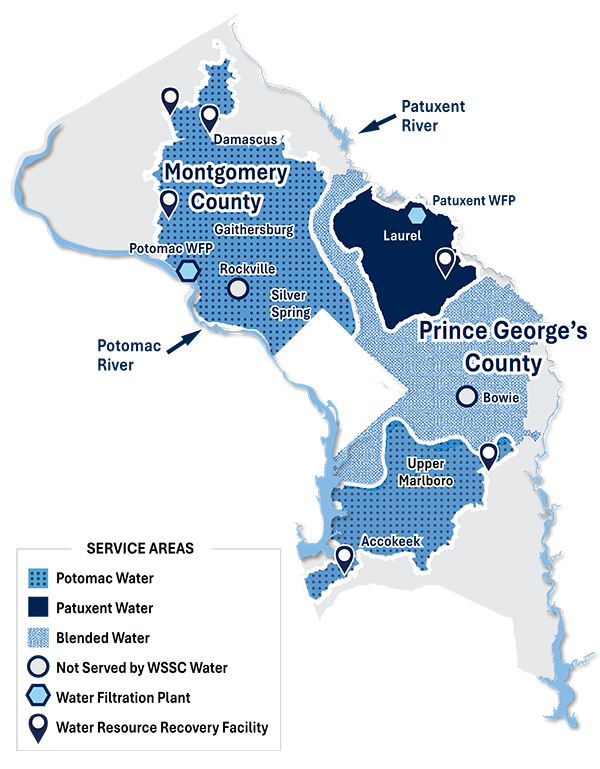
Most people know that salt is effective in melting snow and ice and it keeps our roadways safe in the winter. But many people may not realize that the salt we use on sidewalks, driveways and roads is harmful to the environment. Salt doesn’t just go away when the snow/ice melts. It seeps into the ground and travels with stormwater into streams and eventually into our drinking water sources – the Potomac and Patuxent Rivers.
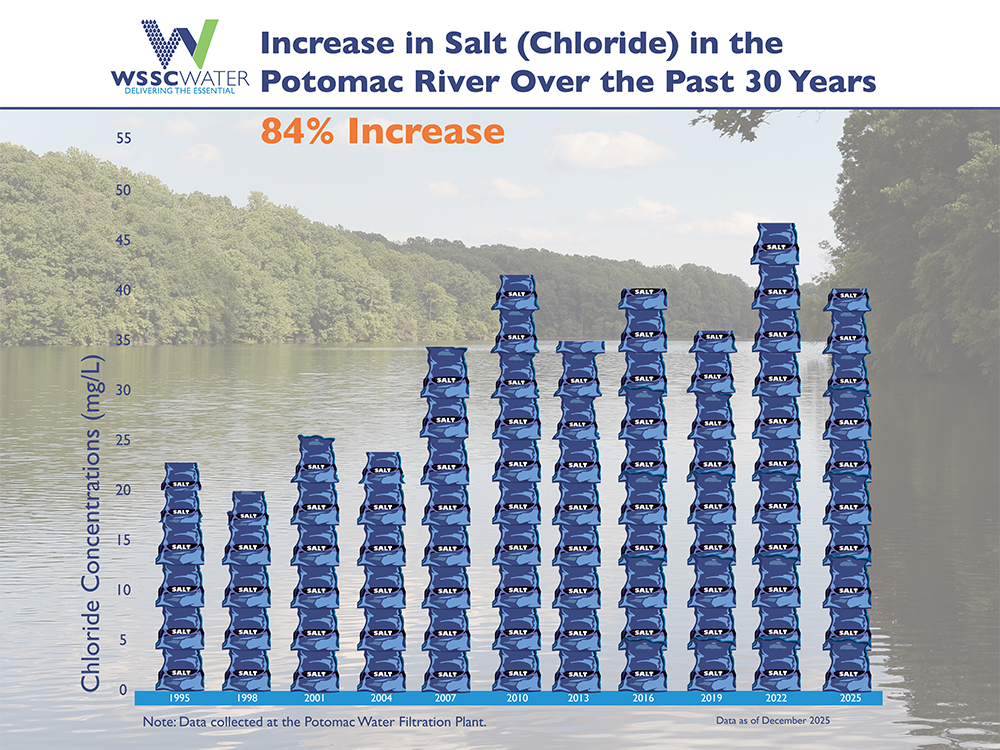
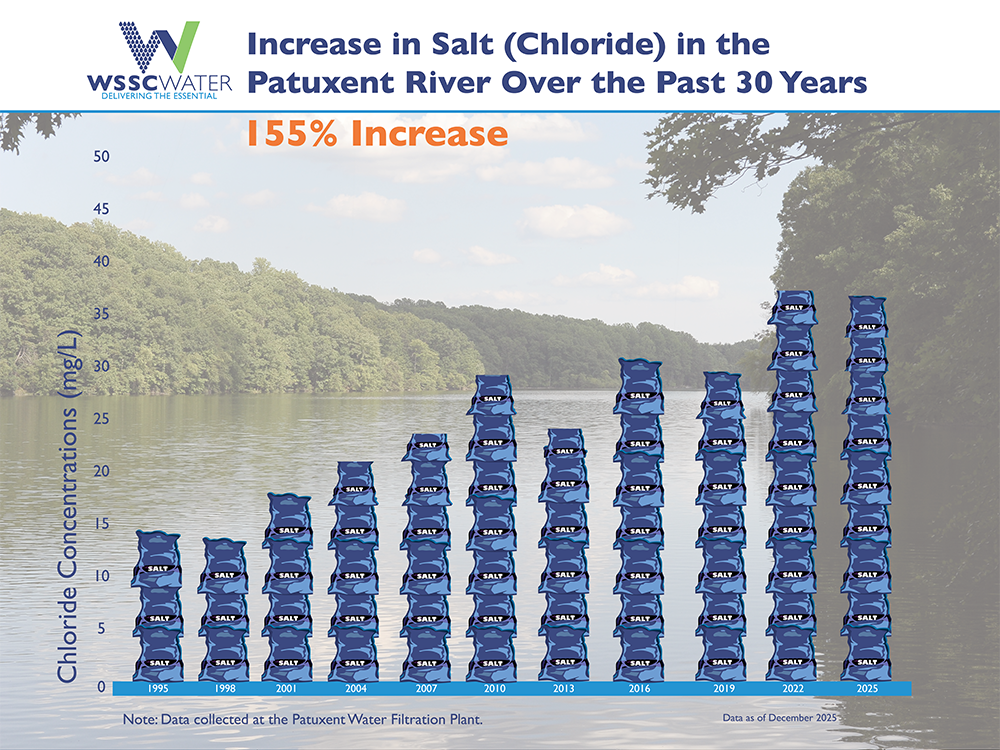
WSSC Water closely monitors the water entering our Potomac and Patuxent Water Filtration Plants. Over the past 30 years, the average salt levels (sodium and chloride are the two components of salt) have been steadily increasing. The levels peak in the winter months and are higher in years where we experience more winter weather events. Because there is no economically feasible way to remove salt during filtration, higher levels end up in the drinking water.
[Image]
| [Image]
|
Damage Salt Causes
What is the impact on human health?
Sodium in drinking water is not a health concern for most of us, but the U.S. Environmental Protection Agency recommends sodium in drinking water be less than 20 milligrams per liter for those on severely restricted sodium diets. We recommend you talk to your doctor if you have medical conditions sensitive to sodium levels, such as high blood pressure or kidney disease.
Learn what you can do to avoid over-using road salt that can contaminate drinking water, harm aquatic plants and animals, and damage metal and concrete.
In the last five years, the State Highway Administration has reduced its overall salt usage by half. See what it and Maryland's Department of the Environment are doing to manage road salt.