 Laurel, Md. – October 15, 2026 – On Imagine a Day Without Water, WSSC Water officials joined Maryland Secretary of the Environment Serena McIlwain, Maryland Secretary of Emergency Management Russell Strickland, county emergency preparedness officials and county fire departments to deliver an important message: Don't just imagine a day without water. Be prepared for it.
The message comes just over two weeks after a power outage at WSSC Water's Potomac Water Filtration Plant prompted an essential-water-use-only request for 1.9 million customers in Prince George's and Montgomery counties. While drinking water remained safe and service was maintained throughout the event, the incident served as a powerful reminder of the importance of preparing for unexpected water service interruptions.
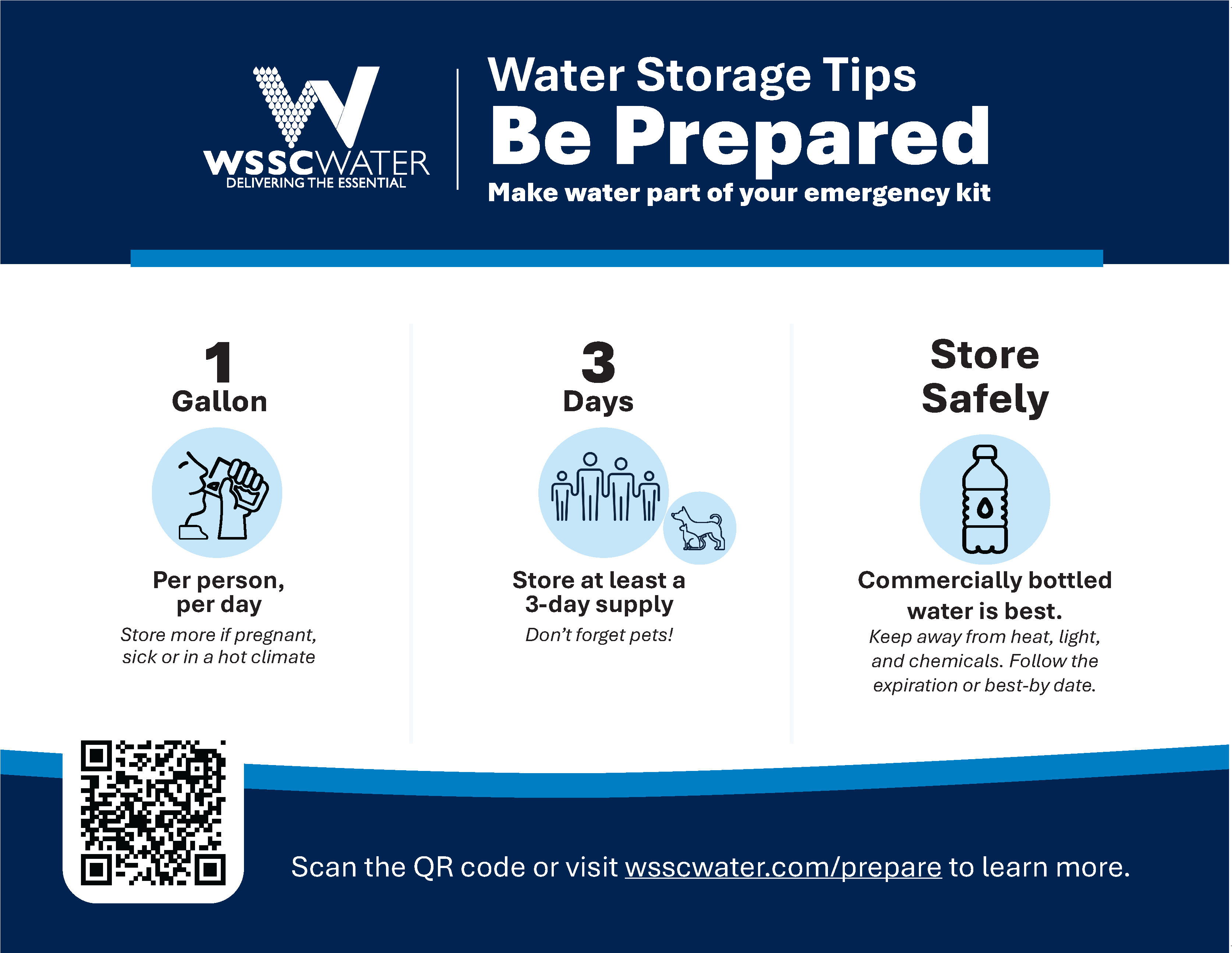
WSSC Water and its emergency preparedness partners urge residents to prepare for a water service interruption by storing water at home:
- Store at least one gallon of water per person per day for a minimum of three days.
- Don't forget your pets!
“What happened at our Potomac Plant is not unique to WSSC Water,” said WSSC Water General Manager and CEO Kishia L. Powell. “We are just the tip of the iceberg. Across the country, water utilities have become accustomed to operating on the brink of crisis as decades of underinvestment in critical infrastructure take their toll. The risks are growing. The systems we depend on every day are aging. And when disruptions occur, the consequences can be enormous, with recovery increasingly complex and costly. We cannot continue to place the burden of needed investments solely on the backs of our customers. I am deeply grateful to our customers for their conservation efforts, which helped protect our water supply, and to our heroic Team H2O members – whose tireless dedication restored power to the Potomac Plant and kept safe, clean water flowing to our communities.”
“We have seen firsthand how important it is to prepare for infrastructure emergencies,” said Maryland Secretary of the Environment Serena McIlwain. “Disruptions can happen, even when dedicated professionals are working around the clock to keep the water flowing. This is why it is so critical for all Marylanders to plan ahead. Simply keeping extra water sources on hand at all times is a step in the right direction.”
"Water utility disruptions ripple outward, creating cascading impacts on our healthcare facilities, schools, local businesses, and critical fire suppression capabilities," said Russ Strickland, Maryland Secretary of Emergency Management. "MDEM stands as the central coordination hub to ensure our partners operate as one unified team, but true emergency resilience begins at home: we urge every Maryland family to build and maintain a three-day emergency water supply kit. Don’t just imagine a day without water. Be prepared for it."
During today's event at the WSSC Water Support Center in Laurel, officials demonstrated how residents can prepare for water emergencies, including the importance of storing an emergency water supply. With fire apparatus from both counties on display, the event also highlighted water's critical role in firefighting and emergency response.
“During the recent power disruption at the Potomac Filtration Plant, Montgomery County took the additional step of purchasing an emergency supply of water to distribute to County residents, if needed,” said Montgomery County Office of Emergency Management and Homeland Security Division Chief Zach Estess. “But even with plans and supplies in place, it would be challenging to meet the water needs of Montgomery County’s over one million residents, which is why it is essential that everyone set aside their own supply for three days. That will allow local emergency management to focus on providing water to those unable to set aside resources themselves: residents in nursing homes, assisted living and rehabilitation facilities, hospitals, and shelters.”
"Imagine a Day Without Water – it's water – sounds simple, right? But water service interruption impacts go far beyond our homes and workplaces," said Prince George's County Office of Homeland Security Assistant Director Anthony Rease. "Emergency preparedness is a shared responsibility that only grows with action."
“Everyone can play a role in keeping our communities safe,” said Prince George’s County Fire and Emergency Medical Services Department Deputy Chief David Wilson. “As you prepare for a water emergency, or any kind of emergency, be sure to talk to your family and neighbors who may need your assistance.”
"For Montgomery County Fire and Rescue Service, water is essential. It is critical to firefighting, emergency response, public health, and the overall safety of the communities we serve," said Montgomery County Fire Chief Corey Smedley. "We may not be able to prevent every man-made and natural disruption, but we can prepare for them. By working together - our emergency responders, water utility, community partners, and residents - we can better protect our community when it matters most."
With winter approaching, the message is especially timely as colder temperatures bring an increase in water main breaks that can cause unexpected service interruptions.
Residents are encouraged to make water part of their household emergency preparedness kits before a disruption occurs. For more information about preparing for water emergencies, visit wsscwater.com/prepare. For additional guidance from the Centers for Disease Control and Prevention on safely storing emergency drinking water, visit tinyurl.com/CDC-WaterStorage.